

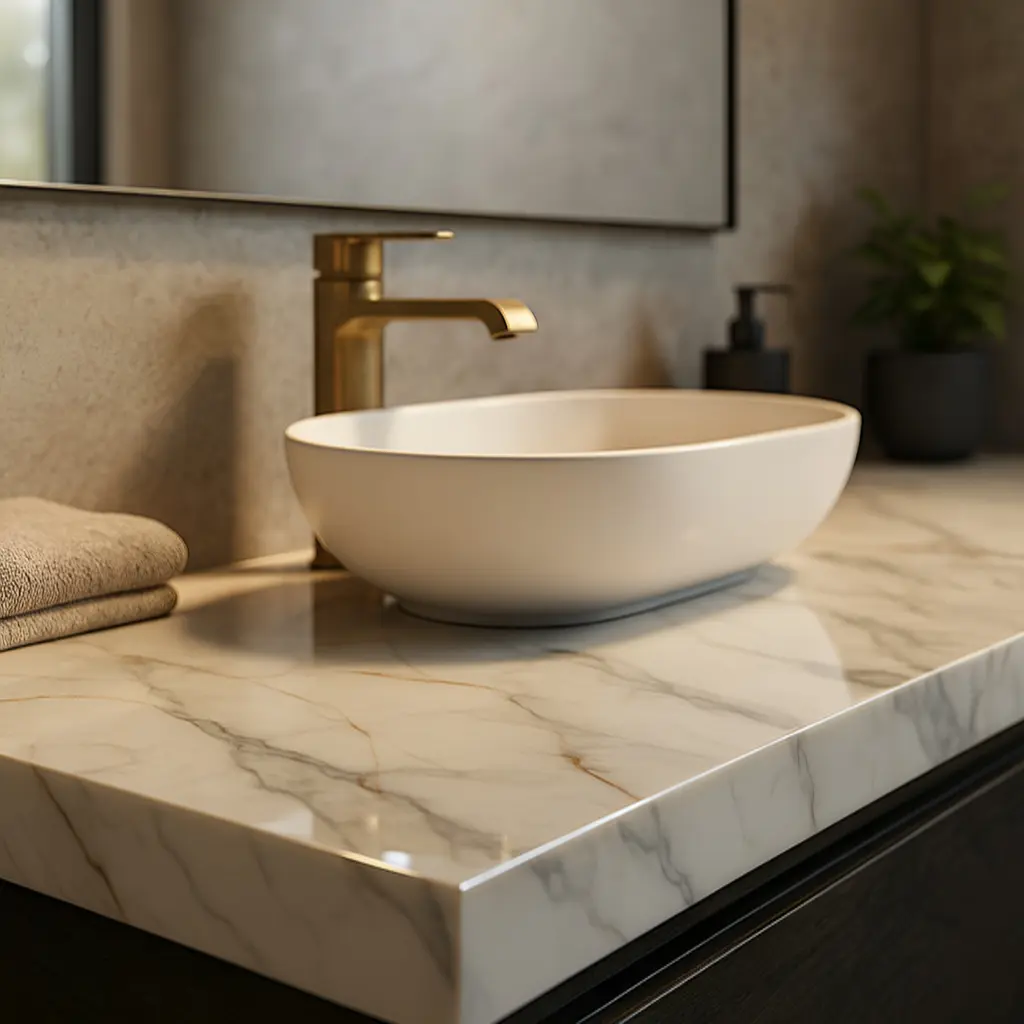
granite marble countertop-201000438701
Granite Marble Countertop: Beauty, Durability, and Timeless Appeal

Granite marble countertop have long been considered premium choices for kitchens and bathrooms. Their natural beauty, durability, and ability to elevate the look of any space make them highly desirable among homeowners, designers, and builders. Although both materials are natural stones and often compared, each has its own characteristics, advantages, and ideal uses. Understanding these differences can help you make the right decision for your home.
What Are Granite Countertops?
Granite is an igneous rock formed deep within the earth under extreme heat and pressure. It is composed mainly of quartz, feldspar, and mica, which gives it its strength and unique patterns. Granite countertops are known for their hardness and resistance to scratches, heat, and daily wear. This makes them an excellent choice for busy kitchens where durability is a priority.
One of granite’s biggest attractions is its wide range of colors and natural patterns. From light whites and beiges to deep blacks, greens, and blues, no two slabs are exactly the same. This uniqueness adds character and a luxurious feel to any space. With proper sealing, granite is also resistant to stains and moisture, making it a long-lasting investment.
What Are Marble Countertops?
Marble is a metamorphic rock formed from limestone under high pressure and temperature. It is admired for its elegant appearance, soft veining, and smooth surface. Marble countertops are often associated with luxury, classic design, and high-end interiors.
Marble is slightly softer and more porous than granite, which means it requires more care. It can be susceptible to scratches, stains, and etching from acidic substances like lemon juice or vinegar. However, many homeowners appreciate the natural aging process of marble, often called a “patina,” which adds character over time. Marble is especially popular in bathrooms, baking areas, and spaces where aesthetics are more important than heavy daily use.
Granite vs. Marble: Key Differences
While both materials are beautiful, their performance differs. Granite is harder and more resistant to damage, making it ideal for high-traffic kitchens. Marble, on the other hand, offers unmatched elegance and a softer look but requires more maintenance.
In terms of maintenance, granite typically needs sealing once every one to two years, while marble may require more frequent sealing and careful cleaning. Cost can vary for both materials depending on rarity, color, and origin, but marble is often slightly more expensive due to its luxurious appeal.
Benefits of Natural Stone Countertops
Both granite and marble countertops add significant value to a home. They are heat-resistant, environmentally friendly, and can last for decades when properly maintained. Natural stone also complements a wide range of interior styles, from modern and minimalist to traditional and classic.
Another major benefit is customization. Countertops can be cut and finished in various edge profiles, thicknesses, and surface finishes such as polished, honed, or leathered, allowing homeowners to achieve their desired look.
Choosing the Right Countertop for Your Home
The choice between granite and marble depends on your lifestyle, budget, and design preferences. If you want a low-maintenance, highly durable surface for a busy kitchen, granite is often the better option. If you prioritize elegance, timeless beauty, and are willing to invest in maintenance, marble can be an excellent choice.
Consulting with a professional stone supplier or installer can help you evaluate slabs in person and choose the best material for your space.
Common Questions About Granite Marble Countertop
1. Are granite countertops better than marble?
Granite is more durable and easier to maintain, while marble offers a more elegant and classic appearance. Neither is “better” overall—it depends on your needs.
2. Do granite marble countertop need sealing?
Yes, both materials require sealing to protect against stains and moisture. Marble usually needs sealing more often than granite.
3. Can marble be used in kitchens?
Yes, but it requires careful maintenance and prompt cleaning to avoid stains and etching.
4. Are granite countertops heat-resistant?
Granite is highly heat-resistant, but using trivets is still recommended to protect the sealant.
5. How long do granite and marble countertops last?
With proper care, both can last several decades or even a lifetime.


Add a comment